
Why Measure Blood Ketones?
May 02, 2026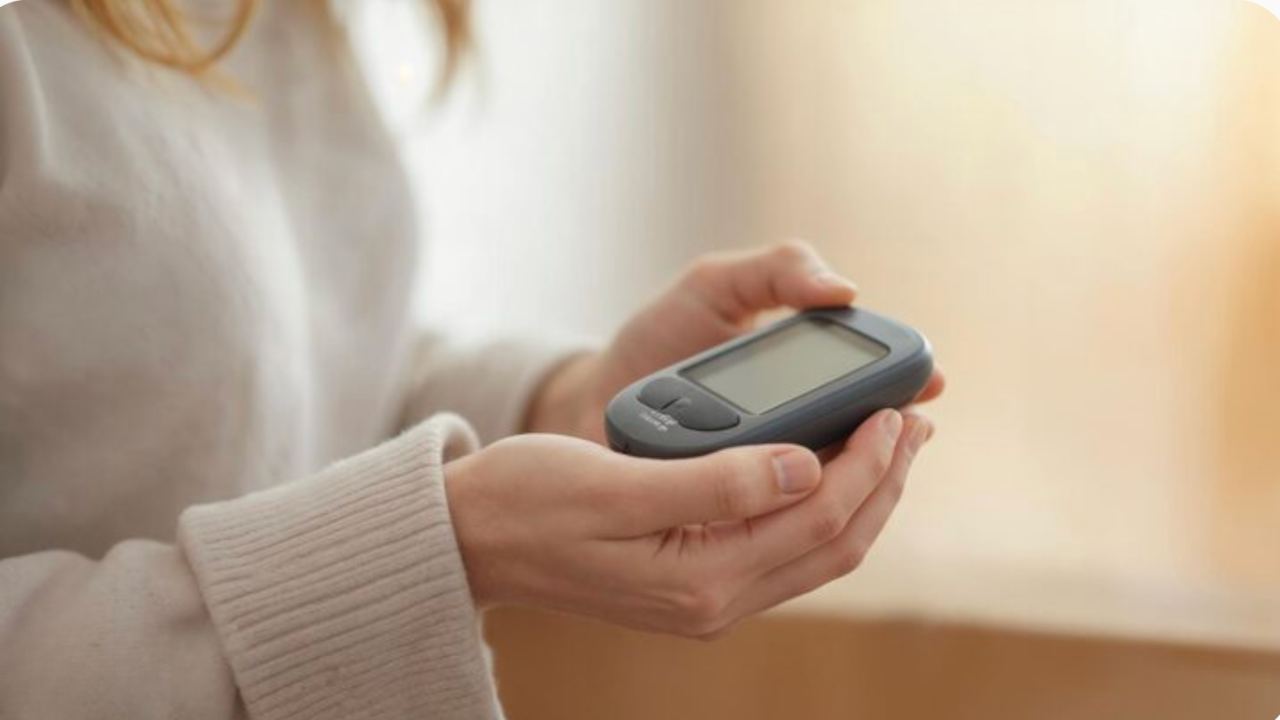
If you have started researching ketogenic metabolic therapy (KMT) for mental health, or if you are already working with our team and partway through the process, you will have heard us talk about measuring ketones. Not occasionally, and not just in the first few weeks: consistently, daily, using a blood ketone meter.
For some, this feels like a lot. You have already overhauled your diet, rethought your relationship with food and, in many cases, navigated significant uncertainty about whether any of this is going to help. Adding a daily fingerprick test can feel like one thing too many.
This post explains why we encourage this and why blood ketone monitoring is a core part of KMT for mental health, not an optional add-on.
Eating keto and being in therapeutic ketosis are not the same thing
This is the central point, and it is worth sitting with for a moment.
When someone follows a ketogenic diet for weight loss, being "close enough" to the dietary targets tends to produce meaningful results over time. The metabolic threshold for weight-loss benefit is relatively forgiving, and compliance can be tracked adequately through food diaries and body weight.
When someone follows a ketogenic diet for a psychiatric condition, the therapeutic mechanism is different. The brain benefits of ketosis, including improved mitochondrial function, reduced neuroinflammation, modulation of glutamate and GABA signalling, and the direct neuroactive effects of beta-hydroxybutyrate (BHB), appear to depend on actually reaching and sustaining a threshold level of circulating ketones. Current clinical evidence and practice in metabolic psychiatry most commonly references a fasting blood BHB of at or above 1.0 mmol/L as a minimum, with many trials targeting higher.
The problem is that you cannot feel whether you are above or below that threshold. The subjective signals people associate with ketosis, such as reduced hunger, mental clarity and steady energy, are inconsistent between individuals and unreliable as a guide to BHB levels. It is also important to understand the cause of any adverse signs like sleep disruption or hypomania. These could be due to stress rather than high BHB levels. Many people feel fine at 0.4 mmol/L. Many people feel excellent and are still sub-therapeutic. Dietary compliance is necessary but not sufficient: two people eating the same meals can produce substantially different blood ketone levels, depending on their insulin sensitivity, body composition, medication burden, stress levels and sleep quality.
The only way to know whether you are in therapeutic ketosis is to measure it.
Why blood BHB is the right metric
There are three main ways to estimate ketone levels: urine test strips, breath acetone meters and blood BHB meters.
Urine ketostix were the first widely available option and remain popular because they are cheap and painless. They measure acetoacetate in the urine, which is elevated early in the ketogenic transition. The problem is that once the body has adapted to using ketones efficiently, the kidneys become better at reabsorbing ketones rather than excreting them. Urinary acetoacetate falls even as blood BHB rises. A keto-adapted person can be well within therapeutic ketosis and register nothing on a urine strip. For clinical monitoring, this makes them unreliable after the initial adaptation period.
Breath acetone meters are a reasonable non-invasive option and have improved considerably, but they measure a different metabolite. They can also produce erratic or inconsistent results based on the pressure and technique of the exhalation. They can be a useful adjunct but are more a measure of fat oxidation than BHB in the bloodstream.
Blood BHB measured by fingerprick is the gold standard. It measures the primary circulating ketone body directly, reflects real-time metabolic state, and gives you a number you can act on. The meters are accurate, the test strips are widely available, and the minor inconvenience of a daily fingerprick is well justified by the clinical value of the information.
What daily monitoring actually tells you
It confirms you are in the therapeutic zone. This sounds obvious, but for many people it is genuinely surprising the first time they measure after what felt like a compliant week and find their BHB at 0.3 mmol/L. Something in the diet, whether excess protein, a sauce with hidden carbohydrates, more frequent eating than planned or a high-stress period suppressing ketogenesis via cortisol, has prevented them from crossing the threshold. Without measurement, they would have no idea.
It catches the things you cannot predict. Ketosis is more metabolically fragile than most people expect. Acute psychological stress raises cortisol, which stimulates gluconeogenesis and suppresses ketone production. Poor sleep does the same. A common cold or minor infection can knock you out of ketosis transiently. Alcohol, even in small quantities, halts hepatic ketogenesis. None of these produce an obvious real-time signal. Your BHB meter will catch them the next morning; your mood and cognition may not flag them for another two days.
It is part of the bigger metabolic picture. BHB and blood glucose exist in an inverse relationship: when circulating glucose is elevated, insulin suppresses hepatic ketone production. This means that someone whose diet appears compliant may nonetheless have persistently sub-therapeutic BHB levels because their fasting glucose remains too high, driven by insulin resistance, medication effects or chronic stress. Measuring blood glucose and BHB allows calculation of the glucose:ketone index (GKI), a ratio that integrates both values into a single marker of metabolic state. The GKI gives your clinician a much fuller picture of what is limiting your therapeutic ketosis than BHB alone can provide, and points toward the specific interventions most likely to help.
It guides clinical decision-making. KMT is a titrated intervention, meaning it is adjusted over time based on individual response. When you bring a log of daily BHB readings to a clinical appointment, your treating clinician can see whether your therapeutic exposure has been adequate, identify patterns that correlate with symptom fluctuation, and make informed adjustments to your protocol. Without that data, decisions about dietary modification, macro ratios, meal timing or the management of co-occurring metabolic factors are made with significantly less precision.
It separates non-response from under-dosing. If someone trialling KMT does not improve, the clinically critical question is whether the therapy was genuinely delivered at a therapeutic dose. A persistent ketone log showing sub-therapeutic BHB levels indicates that the dose was not achieved, rather than that KMT is ineffective for this person. This distinction changes the clinical pathway considerably, from "KMT didn't help" to "KMT hasn't yet been adequately trialled." Without daily data, this question often cannot be answered.
It provides biofeedback that supports adherence. This is a dimension of monitoring that tends to be underestimated. Seeing a concrete, objective number rise in response to good dietary choices is meaningfully reinforcing in a way that subjective wellbeing is not, particularly in the early weeks when clinical benefit may not yet be apparent. Seeing it drop following a dietary deviation provides corrective information cleanly, without the emotional charge that often accompanies perceived failure. The number is just information, and information is something you can act on.
Why this matters more in a psychiatric context
In a general wellness or weight-management context, the consequences of inconsistent ketone levels are modest: slower progress, some variability in results. In a psychiatric context, the stakes are different.
Many people coming to KMT are managing serious, treatment-resistant conditions, including depression, bipolar disorder, schizophrenia, ADHD and anxiety disorders, often after years of inadequate response to conventional treatment. For these individuals, a sustained period of sub-therapeutic ketosis represents weeks or months of continued suffering that could have been avoided with earlier identification and correction of the dosing gap.
There is also a specific complication in this population that does not apply in most wellness contexts: psychiatric medications. Several medications commonly prescribed for mental health conditions interfere with glucose and insulin metabolism in ways that directly suppress ketogenesis. Second-generation antipsychotics, particularly olanzapine, quetiapine and clozapine, are associated with significant insulin resistance and metabolic dysregulation. Valproate has complex effects on fatty acid oxidation. Corticosteroids elevate blood glucose via gluconeogenesis. If you are taking any of these medications, the dietary threshold required to produce therapeutic ketosis may be substantially higher than standard guidelines suggest, and dietary compliance alone is a completely unreliable guide to your actual metabolic state.
Finally, insight and mood awareness, the very capacities that would otherwise allow you to notice that something is wrong, are often among the first casualties of the psychiatric conditions KMT is being used to treat. Ketone data provides an objective external signal at exactly the moments when internal monitoring is least reliable.
A practical note on how to monitor
Test at a consistent time each day. Testing before your first meal is the most practical approach, since it also allows you to measure fasting blood glucose at the same time. If you are finding it difficult to push your ketones above 1.0 to 2.0 mmol/L, your fasting glucose level provides important additional information: the ratio of blood glucose to ketones (known as the glucose:ketone index, or GKI) is a useful marker of metabolic state, and both values are at their most stable and least meal-influenced when measured in the fasted state. A second reading two hours after your largest meal can reveal glycaemic responses that are suppressing ketogenesis without being obvious from dietary tracking alone.
Log your reading alongside brief contextual notes: what you ate, how you slept, stress level, mood or symptom rating. Even one or two words of annotation transforms a column of numbers into a clinically interpretable dataset.
Do not react to individual readings in isolation. A single low reading on a difficult day is a data point, not a verdict. Look for trends over three to five days, and bring your log to every appointment.
If you are consistently unable to reach or sustain your target range despite genuine dietary compliance, raise this with your clinician promptly. There are almost always identifiable and modifiable reasons, and identifying them early makes a significant difference to clinical outcomes.
Ready to begin?
If you are considering ketogenic metabolic therapy for mental health and would like to work with clinicians who take the therapeutic rigour of this approach seriously, we can help.
Initial appointments with our doctors and clinicians are available via telehealth Australia-wide. Sessions are 60 minutes and attract a Medicare rebate under a valid Mental Health Care Plan.
Perri Carlson-Hawke is a Clinical Psychologist and Director of Metabolic Psychology, Australia's first clinical psychology practice specialising in ketogenic metabolic therapy for mental health. She holds a Master of Psychology (Clinical) and specialist credentials in eating disorders (CEDC). Metabolic Psychology is a multidisciplinary clinic comprising clinical psychologists, consultant psychiatrists and dietitians, operating via telehealth across Australia.
Stay connected with news and updates!
Join our mailing list to receive the latest news and updates from our team.
Don't worry, your information will not be shared.
We hate SPAM. We will never sell your information, for any reason.
