
How Ketosis Works in the Brain: A Clinician’s Guide for Patients
Feb 27, 2026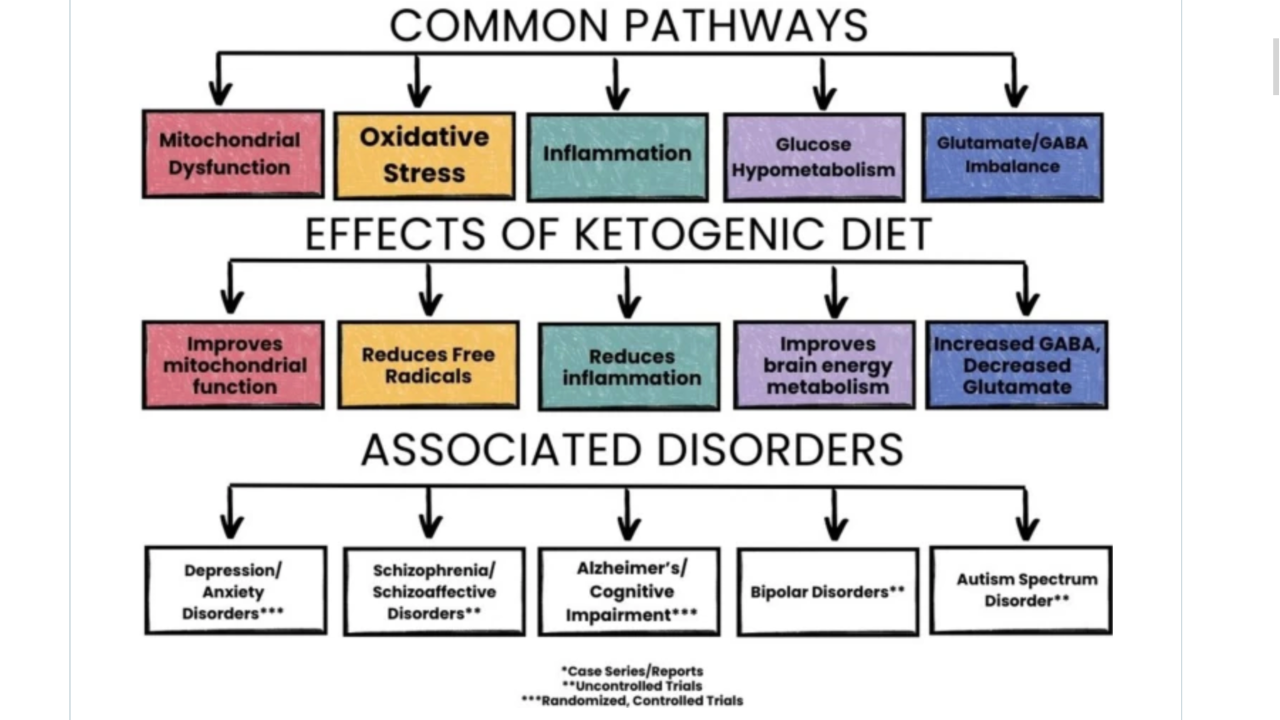
Your brain is the most energy-hungry organ in your body. To work well, it needs a steady and reliable fuel supply. Most of the time, that fuel is glucose, which comes from the carbohydrates you eat. But glucose is not the only option. When carbohydrate intake is very low, your body switches to an alternative fuel called ketones. This switch is called ketosis, and it turns out to be remarkably good for the brain.
Where Do Ketones Come From?
When you eat very few carbohydrates, your blood glucose drops. Your body then turns to stored fat for energy. The liver breaks down fat and produces molecules called ketone bodies. The three main ketones are beta-hydroxybutyrate, acetoacetate, and acetone. These travel through the bloodstream and into the brain, where they are used as fuel.
This is not an unusual or dangerous state. Ketosis is a normal part of human metabolism. Our ancestors likely spent significant time in ketosis between meals or during periods when food was scarce.
Why Ketones May Be Better for Some Brains
In many mental health conditions, the brain’s ability to use glucose is impaired. Research shows this is particularly true in conditions such as schizophrenia, bipolar disorder, depression, and Alzheimer’s disease. The brain essentially struggles to get enough energy from glucose, even when glucose is available.
Ketones bypass this problem. They enter the brain’s energy pathway at a different point. This means they can fuel brain cells that are no longer able to use glucose efficiently. Think of it like a backup generator that kicks in when the main power supply is failing.
What Ketones Do Inside the Brain
Beyond providing fuel, ketones have several other important effects on the brain.
They reduce inflammation. Chronic inflammation in the brain is linked to depression, anxiety, and many other mental health conditions. Ketones help to switch off some of the pathways that drive this inflammation.
They support the production of GABA, which is the brain’s main calming chemical. Many people with anxiety, bipolar disorder, and epilepsy have low GABA activity. A ketogenic diet appears to increase GABA levels, which may help to stabilise mood and reduce anxiety.
They increase a protein called BDNF, which stands for brain-derived neurotrophic factor. BDNF helps brain cells survive, grow, and form new connections. Low BDNF is associated with depression. Higher BDNF supports learning, memory, and resilience.
They reduce oxidative stress. This is a type of cellular damage caused by unstable molecules called free radicals. Oxidative stress is thought to contribute to many psychiatric and neurological conditions. Ketones help to neutralise free radicals and protect brain cells.
How the Brain Adjusts to Ketones
The transition into ketosis takes time. In the first one to two weeks, some people notice fatigue, headaches, or difficulty concentrating. This is often called “keto flu” and reflects the brain adapting to a new fuel source. It is temporary. Once the brain has adapted, most people report improved clarity, steadier energy, and more stable mood.
This adaptation period is one reason that ketogenic therapy for mental health is not a quick fix. The therapeutic benefits tend to build gradually over weeks and months.
Why This Matters for Mental Health Treatment
Metabolic dysfunction is now understood to be a significant factor in many mental health conditions. When the brain cannot produce energy efficiently, it cannot regulate mood, manage stress, or process information well. Ketogenic therapy addresses this at its root by providing the brain with a superior and more stable fuel source.
This does not mean that ketogenic therapy replaces psychological treatment. Rather, it can work alongside therapies such as cognitive behaviour therapy or medication, addressing the biological foundations that other treatments do not reach.
If you are curious about whether ketogenic therapy might be appropriate for your situation, a clinician trained in metabolic psychiatry can help you assess your options and support you through the process safely.
---
Above image from: Anderson, J., Ozan, E., Chouinard, V.-A., Grant, G., MacDonald, A., Thakkar, L., & Palmer, C. (2025). The ketogenic diet as a transdiagnostic treatment for neuropsychiatric disorders: Mechanisms and clinical outcomes. Current Treatment Options in Psychiatry, 12, 1. https://doi.org/10.1007/s40501-024-00339-4
Stay connected with news and updates!
Join our mailing list to receive the latest news and updates from our team.
Don't worry, your information will not be shared.
We hate SPAM. We will never sell your information, for any reason.
