
Mental Health is Brain Health
Jul 18, 2026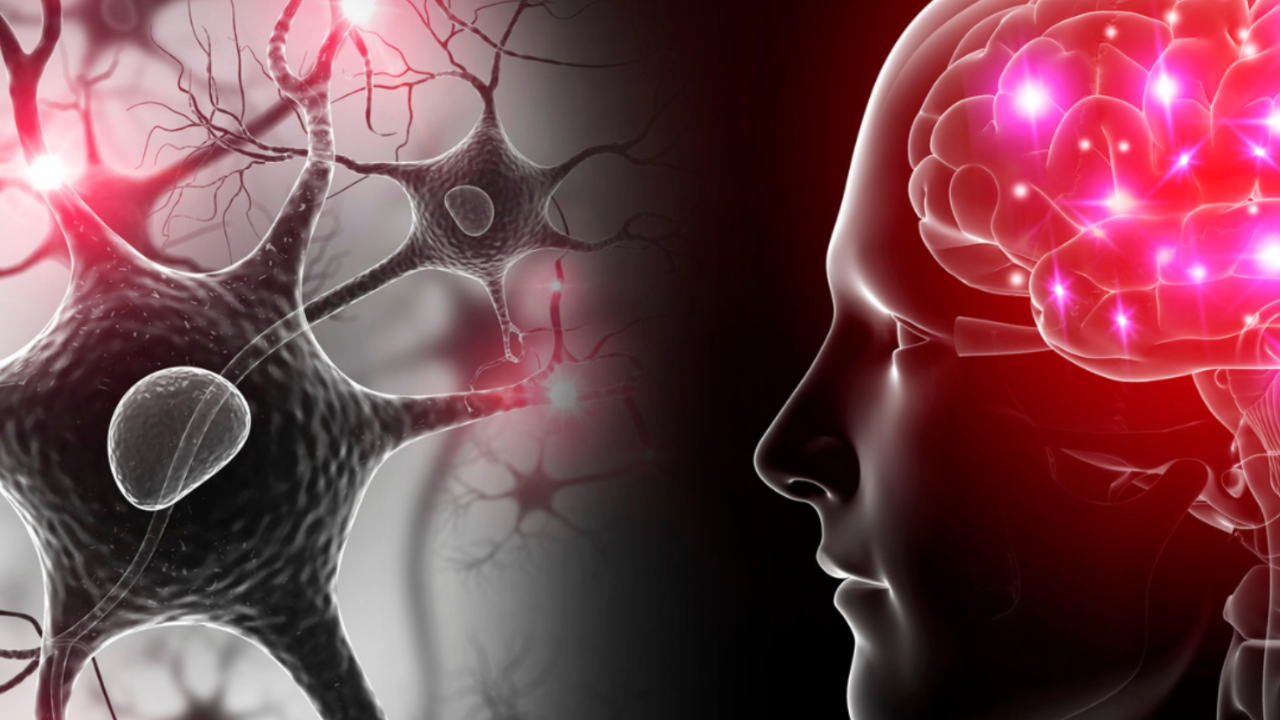
Ask most people what mental health means and you will get an answer that sounds vaguely psychoanalytic. Something to do with the unconscious. Something to do with the ego or the id, with drives and defences and things buried in childhood. Something, in any case, that seems to float somewhere above the body, in a realm of its own, accessible only through talking and interpretation.
The legacy of Cartesian dualism has left us with a category of health that feels unreal compared with the rest of medicine. A category people are reluctant to claim and clinicians are sometimes reluctant to investigate. Nobody describes a cardiac arrhythmia as a metaphor. Nobody suggests a failing kidney is a character flaw.
The brain is an organ. It is roughly a kilogram and a half of tissue with a blood supply, an energy supply, chemically driven electrical signals, an inflammatory status and a repair capacity. It is the most metabolically demanding organ in the body, and it has almost no capacity to store fuel, which means it depends on a continuous, stable supply delivered from outside itself. Everything you have ever thought, felt, remembered or decided has been a physical event in that tissue. Mental health is what we call the functional output of that organ. Which is to say, it is brain health.
The Wear and Tear of Being Alive
The most useful concept in this whole area is one most people have never heard of, and it comes from neuroscience rather than psychology. In 1993 Bruce McEwen and Eliot Stellar described allostatic load, the cumulative cost to the body of adapting to repeated or chronic demands.
Those demands are met by systems that keep you alive. Cortisol rises before you wake. Blood pressure climbs when you stand. The immune system mounts a response to a threat and then, ideally, stands down. Blood glucose is defended within a narrow range, across a day of eating, fasting, working and sleeping. These systems are not designed to sit still. They are designed to move accurately and then to come back.
Allostatic load is what accumulates when they cannot. It builds when the systems are switched on too often, when they fail to switch off once the challenge has passed, when they stop habituating to something that happens over and over, or when one system underperforms and the others compensate by running hot. Allostatic overload is the term for the point at which the accumulated cost outstrips what the body can absorb, and function starts to fail.
What makes this so relevant to mental health is where the load lands. The brain is the organ that decides what counts as a threat in the first place, which makes it the interpreter.
Mental Health is Brain Health and the Brain is a Part of the Body
The old split between the psychological and the physical had to assume there was some barrier between what happens to a person and what happens in their tissue. Allostatic load is a detailed account of why no such barrier exists.
Work stress can be an endocrine event. A bereavement can be an immune event. Twelve years of childhood development in an unpredictable household can be a metabolic event, and the load it generates can still be measured decades later. This is one reason why adverse childhood experiences track so strongly with adult physical disease and not only with adult psychiatric disease; the body never filed them in separate drawers. Insecure housing, chronic financial strain, discrimination and unrelenting work are among the most reliable generators of allostatic load we know of, which means that a good deal of what we have been calling mental illness is a physiological record of circumstance.
Once you can see the load, the whole spectrum starts to look like one thing rather than several. At the everyday end, brain fog and low motivation and the flat loss of interest in things you know you enjoy, are what an organ does when its fuel supply is unstable and its inflammatory tone is raised. Motivation is partly a calculation about whether something is worth the energy it will cost. A brain running under load will cut back, and it will cut back on effort first.
Further along the same spectrum, a substantial subgroup of people with major depressive disorder show elevated inflammatory markers and dysregulation of the hypothalamic-pituitary-adrenal axis, which is allostatic load described in a different vocabulary. Further along again, in schizophrenia-spectrum and bipolar disorders, impaired glucose tolerance and insulin resistance are detectable in some people at first episode, before any exposure to antipsychotic medication, alongside mitochondrial dysfunction and oxidative stress. An organ that cannot reliably generate energy cannot reliably regulate its own excitability, and an organ that cannot regulate its own excitability produces exactly the phenomena we have spent a century describing in psychological language.
The Same Story, Told Slowly
Extend the timeline far enough and the load takes a form we all fear. In Alzheimer's disease, reduced cerebral glucose metabolism is visible on FDG-PET imaging, and in people at genetic risk it can be detected well before any clinical symptoms appear. The brain develops a fuel problem long before it develops a memory problem. Impaired insulin signalling within the central nervous system is now well described, which is why the condition is sometimes referred to, informally and imperfectly, as type 3 diabetes. Type 2 diabetes, hypertension, midlife obesity and physical inactivity all carry elevated dementia risk. Vascular contributions are common and mixed pathology is closer to the rule than the exception.
The Lancet Commission on dementia prevention has made the point repeatedly that a substantial proportion of dementia cases worldwide are attributable to modifiable risk factors, most of them metabolic, vascular, sensory or social. Depression sits on that list, and it sits there ambiguously; it may be a risk factor, an early manifestation, or both. That ambiguity is exactly what you would expect if psychiatric symptoms and neurodegenerative symptoms are the same organ, under the same accumulated load, at different points in a life.
Interestingly, while the Alzheimer's brain loses its capacity to use glucose efficiently, its capacity to use ketone bodies appears to be relatively preserved. That observation is one of the reasons metabolic approaches to brain disease have attracted serious research attention.
What Might Change if We Take This Seriously
If a psychiatric condition is a disorder of an organ under load, then having one carries the same moral weight as having asthma, which is to say none at all. Shame becomes very hard to justify. This is not a rhetorical kindness offered to make people feel better. It is simply a more accurate description than the one we have been using, and the older description has been doing real damage for a long time.
Assessments would improve. When someone presents with fatigue, low mood, poor concentration and reduced motivation, the question of what their inflammatory status, glycaemic control, iron studies, thyroid function, sleep architecture, alcohol intake and medications look like, is not an alternative to psychological formulation. It is part of it. Treating a metabolic problem with insight alone is not enough and so is treating grief with a blood test.
Psychology is enhanced rather than dismissed. If experience is written into tissue, then experience matters more than the old model allowed, not less. Trauma is not demoted to a story about neurons; it is promoted to a biological event with a measurable signature. Psychotherapy can be a biological intervention. It works by changing a physical system, which is the only way anything has ever worked. Meaning, relationship, safety and the sense of having some control over your own life are not soft additions to real medicine. They are among the most powerful determinants of allostatic load we have identified.
The social becomes medical. If poverty, isolation, discrimination and chronic insecurity generate measurable physiological load, then they are not merely context for illness. They are part of its aetiology, and no amount of individual work fully compensates for an environment that keeps the systems switched on.
Psychotherapy and psychiatric medication remain first-line, evidence-based and often essential and nothing here is an argument against either. But once you understand load, the ordinary things stop being trivial. Sleep, daylight, movement, nutrition, glycaemic stability, alcohol reduction, recovery time and human connection all act directly on the systems that generate and clear the load. We do not usually call them biological interventions. They are.
Ketogenic metabolic therapy, which is the area I work in, sits inside this same frame. It targets cerebral energy metabolism directly, and the early clinical and research signals in serious mental illness are genuinely interesting. It is also an emerging field rather than a settled one; the evidence base is still developing, it is not appropriate for everyone, and it belongs alongside psychiatric and psychological care under proper medical supervision. Enthusiasm and rigour have to travel together.
Awareness Needs to Change
Mental health awareness campaigns tend to end at the point of encouraging people to speak up. That is worth doing, and it is a low bar and it leaves the underlying category exactly where it was. It still implies there is a separate, softer, slightly embarrassing kind of health over here, and real medicine over there.
There is one kind of health. Some of it happens in the brain. The brain is an organ, it runs on fuel, it inflames, it adapts, it wears, it recovers, and it keeps a running account of everything you have had to withstand. How that organ is going, determines how you are going.
I think our mental health awareness campaigns should focus on this reality: mental health is physical health. That is not a diminishment of the inner life. It is the reason the inner life exists at all and it is the reason the inner life can be helped.
Stay connected with news and updates!
Join our mailing list to receive the latest news and updates from our team.
Don't worry, your information will not be shared.
We hate SPAM. We will never sell your information, for any reason.
